
- Homepage
- Authenticity
- Characteristics
- Boxed, On Canvas (2)
- Framed (40)
- Framed, On Canvas (60)
- Framed, On Panel (17)
- Framed, On Wood (10)
- Framed, Signed (10)
- Oil On Paper (2)
- On Canvas (390)
- On Canvas, Framed (5)
- On Canvas, Signed (7)
- On Panel (82)
- On Panel, On Canvas (18)
- On Wood (18)
- On Wood, On Canvas (2)
- On Wood, On Panel (4)
- One Of A Kind (ooak) (3)
- Signed (32)
- Signed, On Canvas (112)
- Signed, On Panel (29)
- Signed, On Wood (7)
- Other (3912)
- Height
- Theme
- Animals (26)
- Animated Landscape. (5)
- Architecture (7)
- Art (8)
- Character (68)
- Child (17)
- Figure (7)
- Flower, Tree (18)
- Genre Scene (54)
- History, War (7)
- Hunting, Fishing (4)
- Interior Scene (4)
- Landscape (451)
- Marine (4)
- Portrait (9)
- Portrait / Face (7)
- Religion, Mythology (45)
- Sacred Subject (9)
- Seascape, Boat (58)
- Still Life (121)
- Other (3833)
- Type
- Width
Old Table Oil Painting Flemish School of Barbizon 17th 18th Gilded Frame
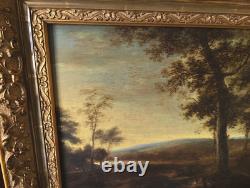
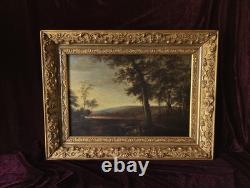


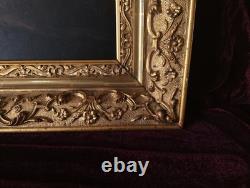
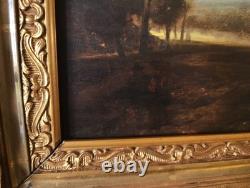
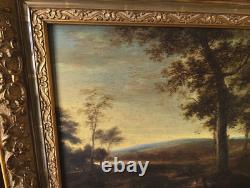
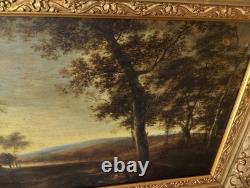
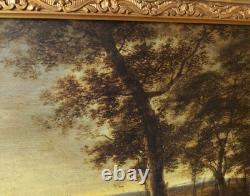
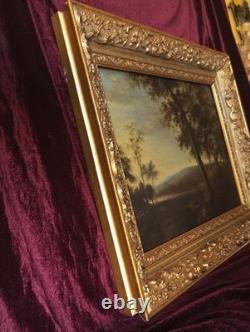
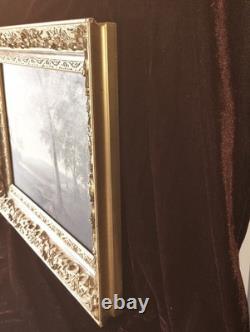



Hello, I am putting this painting up for sale. It measures approximately 55 cm long by 40 cm high, referring to the overall dimensions of the support, and about 65 cm by 50 cm including the frame. It is a superb oil on wooden panel. I am unable to know its exact period with certainty; however, the person who gave it to me some time ago told me, based on what the person they bought it from had said, that it dated back to the 17th century. It may nevertheless be from the 18th century.
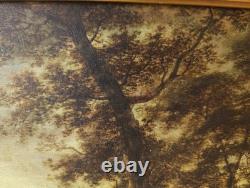
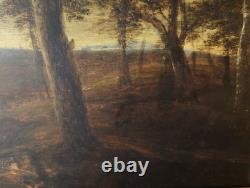
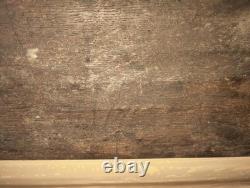
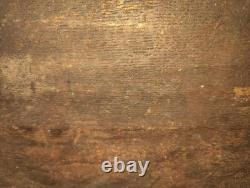
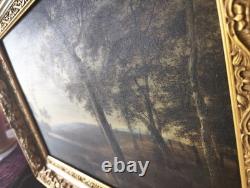
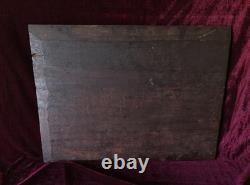
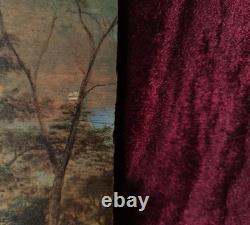
There is, however, little chance that it dates from as late as the 19th century, for an interesting reason: from the 1800s onward, the dimensions of wooden panels used for paintings decreased noticeably; here, they are relatively large. The wood also shows significant oxidation, full of character. I searched carefully but found no trace of a signature, apart from curious inscriptions on the back of the panel (last photos), such as geometric shapes and a mention that looks like “N2”.The dimensions, with rather “round” values, or at least very close to them, with these 55 and 40 cm measurements, the presence of a few figures, as well as the style of this composition, very naturalistic, at times obsessively detailed, with foliage where each leaf seems to have been painted one by one, and details such as the presence of a bird (circled in red, 12th photo), at other times marked by purity, evoke a Flemish school full of mastery, both in technique and intent.
More than simply depicting a rural landscape, this painting does so with all the magic characteristic of the best artists associated, to borrow a French term for a moment, with the Barbizon influence. The same magic that those talented painters knew how to breathe into their works.
Thus, in this dawn scene, there is something dreamlike, through which one imagines the clouds moving gently; we witness the birth of superb plays of light, where the dominant tone, a pale, veiled yellow, shifts very slightly here and there toward blue-gray, a remnant of night, and even more subtly toward green (very delicate, but unmistakably present). Let us imagine for a moment that, in order to render a light of such purity, faithful even in its most subtle nuances, the painter in question undoubtedly waited on site for the very first ray of day, if not spent part of the night awaiting this deliverance from darkness, taking the time to prepare all his materials, sharpen his eye, feel deep within himself the atmosphere of the surrounding nature despite the cold, the wind, and the numbness of his hand eager to record his vision, then reach transcendence; and repeat the same process over several days, even several weeks. Such a soul could only produce such a result.
The many traces of wear here and there, in the form of figures with very faded, almost vanishing outlines and textures (like those two men and a dog in the foreground), only enhance the rendering of light and nature; small scratches, minor impacts, tiny losses, very fine cracks, which are very interesting, and a few areas more blurred than others, all of which are of no serious concern, create an appearance that is rare enough to mention and can be described as remarkable patina, meaning a harmonious surface in which no blemish really catches the eye and which constitutes an utterly authentic testimony to the work’s passage through time. This patina is enhanced by the thoughtful addition of a light varnish, providing protection and a beautiful satin sheen. I have noticed no touch-ups or other restorations.
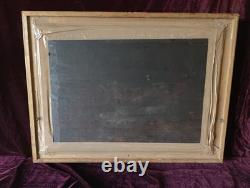
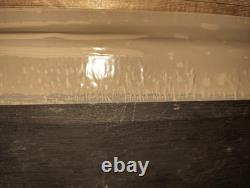
The wooden panel, thick and even more so in some areas, speaks of quality and solidity, and is perfectly flat and straight; its few very light losses and superficial scratches/marks on the back will have no effect whatsoever. It has two very slight cracks on the right side, which are not serious, and shows no woodworm holes or damage to its integrity; exceptional when one considers that this support may be more than four hundred years old.
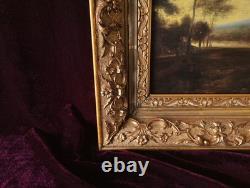
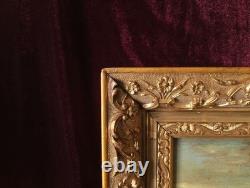
The superb frame, which fits the work like a glove, is in good to very good overall condition, with a few signs of wear and a few losses, discreetly retouched here and there. It too can boast remarkable sturdiness.
Please note that the top and bottom sides have been “extended” so that the panel could fit, but this has no effect on the strength of the frame.
The adhesive tape used to hold the panel in place, while it may be seen as a temporary solution, is surprisingly effective, both easy to remove and sufficient to keep the panel from falling or sliding. Nevertheless, you may wish to consider a more durable solution that is entirely risk-free in the long term. The photos were taken in the afternoon in a very well-lit room.
In-person pickup is entirely possible if you are able to travel. For this to be taken into account, it is essential that if the box is damaged sufficiently, in any place whatsoever, and/or opened, even partially, you ask the courier to note reservations if it is a postal shipment, or refuse the parcel at the relay point staff if it is a pickup-point shipment, UNLESS, and you must ask them this, you have the possibility to note reservations using the scanning device for shipping labels; in that case you may then receive the parcel before they scan the shipping label or carry out any other operation confirming that you have collected the parcel. In other words, ask to carefully inspect the condition of the box, without omitting any area, in both cases before they act.
In the case of a relay-point delivery, if you refuse receipt, the parcel will be kept by the relay point in order to be returned to the inspection service, for verification aimed at establishing the delivery staff’s responsibility and making the insurance effective (information gathered from their website), should the item be damaged. With La Poste, if the delivery is made to your mailbox because the parcel’s dimensions allow it, without hand delivery, and the box is sufficiently damaged (a judgment you must make), you must take it unopened to the nearest post office and ask the staff at the counter to return the parcel to me (information gathered from their website), again in anticipation of a delivery-service review, UNLESS, as in the relay-point case, the post office staff can note reservations.
In all cases, do not hesitate to take photos of the damaged and/or opened box.
You may think, for any reason, that the item inside the box remains in perfect condition despite the parcel being damaged sufficiently and/or opened, even partially, and therefore that you do not need to make reservations, or that you should accept the parcel if reservations cannot be made; but be aware that this is like playing Russian roulette, since delivery services rely on the margin for error, which also suits them very well because, as I repeat, the insurance is then no longer valid due to damage, because of the sacred transfer of responsibility from the carrier to the sender or recipient; fewer expenses for them, since they will not have to pay out the insurance amount. And do not rely on shaking the parcel to determine whether the item is broken; unless it is made of glass or ceramic, the sound of breakage is imperceptible, or it may simply be a protective element inside the parcel. Make sure to communicate all of this if a third party is collecting the parcel on your behalf.
If, however, the condition of the returned item differs from what it was when I sent it, but no proof can establish that the delivery staff are responsible, then there will be no refund, because even with excellent packaging it can happen that transport shocks are extremely severe and yet cause no external damage to the box.
If you have any questions or would like more photos, please feel free to let me know.