
- Homepage
- Characteristics
- Boxed, On Canvas (2)
- Framed (40)
- Framed, On Canvas (60)
- Framed, On Panel (17)
- Framed, On Wood (10)
- Framed, Signed (10)
- Oil On Paper (2)
- On Canvas (390)
- On Canvas, Framed (5)
- On Canvas, Signed (7)
- On Panel (82)
- On Panel, On Canvas (18)
- On Wood (18)
- On Wood, On Canvas (2)
- On Wood, On Panel (4)
- One Of A Kind (ooak) (3)
- Signed (32)
- Signed, On Canvas (112)
- Signed, On Panel (29)
- Signed, On Wood (7)
- Other (3910)
- Genre
- Abstract (23)
- Académisme (16)
- Art Deco (23)
- Art Déco (40)
- Baroque (35)
- Classicism (174)
- Classicisme (191)
- Cubism (14)
- Expressionism (177)
- Expressionnisme (90)
- Fauvism (47)
- Fauvisme (16)
- Impressionism (200)
- Impressionnisme (202)
- Orientalism (16)
- Realism (83)
- Romanticism (40)
- Romantisme (34)
- Réalisme (77)
- Voir Photos (33)
- Other (3229)
- Height
- Theme
- Animals (26)
- Animated Landscape. (5)
- Architecture (7)
- Art (8)
- Character (68)
- Child (17)
- Figure (7)
- Flower, Tree (18)
- Genre Scene (54)
- History, War (7)
- Hunting, Fishing (4)
- Interior Scene (4)
- Landscape (451)
- Marine (4)
- Portrait (9)
- Portrait / Face (7)
- Religion, Mythology (45)
- Sacred Subject (9)
- Seascape, Boat (58)
- Still Life (120)
- Other (3832)
- Type
- Width
Lucien HENRY (1850-1896) Old oil on canvas Barbizon School Australia
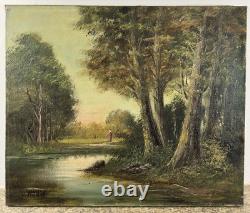
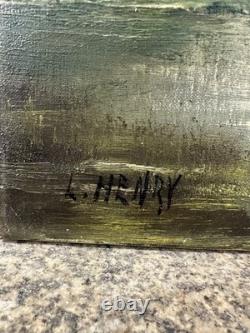
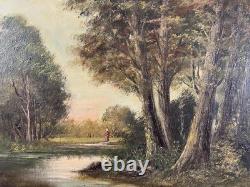
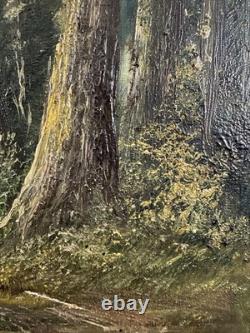
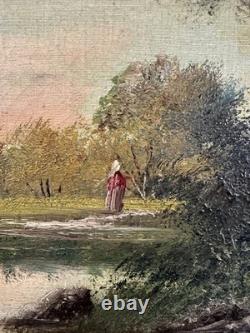
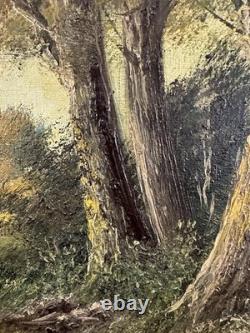
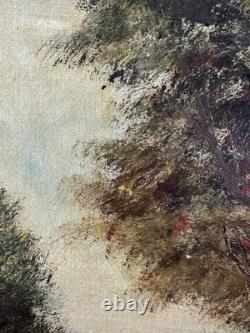
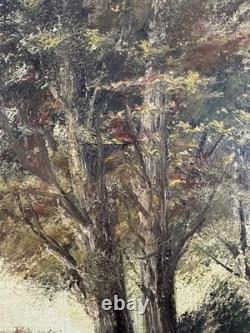
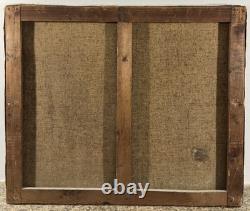
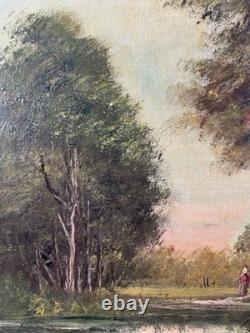

HENRY for Lucien HENRY at the bottom left. Artwork: 46 x 55 cm.
Lucien Félix Henry was born in Sisteron (Alpes-de-Haute-Provence) on May 22, 1850, and died in Saint-Léonard-de-Noblat (Haute-Vienne) on March 10, 1896. He was a French painter, active in Sydney.
A socialist activist, he was a prominent figure of the Paris Commune. He is often confused with Fortuné Henry, another communard, in many historical works about the Commune. Lucien Henry arrived in Paris in 1867 to take courses at the Beaux-Arts and became the model for the painter and sculptor Jean-Léon Gérôme. A socialist activist and a member of the First International, he contributed to the newspaper La Résistance. On March 11, 1871, he was elected chief of the legion of the 14th arrondissement and became "Colonel Henry." On April 3, he participated in the sortie from Châtillon, which was repelled by the Versailles troops. During this unfortunate offensive, he was arrested. Sentenced to death in 1872, his sentence was commuted to deportation to New Caledonia. New South Wales (1888), stained glass from the Centennial Hall of Sydney Town Hall. Pardoned in 1878, he settled in Australia in June 1879, the year of the Sydney International Exhibition. He married another exile, Juliette Rastoul, born Lopez, in 1880, who was the widow of Dr.He then gained some notoriety as a painter and teacher. The stained glass windows of Sydney Town Hall are his masterwork. He established art education at the Sydney Technical College, as well as a specifically Australian approach to decorative arts, using motifs inspired by local flora and fauna, such as the telopea (waratah). He returned to France in 1891 in search of a publisher for a collection of his Australian watercolors and died in 1896 in the hamlet of Pavé in Saint-Léonard-de-Noblat, where he was buried.