
- Homepage
- Art Movement
- Authenticity
- Characteristics
- Boxed, On Canvas (2)
- Framed (40)
- Framed, On Canvas (61)
- Framed, On Panel (17)
- Framed, On Wood (10)
- Framed, Signed (10)
- Oil On Paper (2)
- On Canvas (393)
- On Canvas, Framed (5)
- On Canvas, Signed (8)
- On Panel (82)
- On Panel, On Canvas (18)
- On Wood (18)
- On Wood, On Canvas (2)
- On Wood, On Panel (4)
- One Of A Kind (ooak) (3)
- Signed (32)
- Signed, On Canvas (113)
- Signed, On Panel (29)
- Signed, On Wood (7)
- Other (3920)
- Genre
- Abstract (23)
- Académisme (16)
- Art Deco (23)
- Art Déco (40)
- Baroque (35)
- Classicism (175)
- Classicisme (191)
- Cubism (14)
- Expressionism (179)
- Expressionnisme (90)
- Fauvism (47)
- Fauvisme (16)
- Impressionism (201)
- Impressionnisme (202)
- Orientalism (16)
- Realism (85)
- Romanticism (40)
- Romantisme (34)
- Réalisme (77)
- Voir Photos (33)
- Other (3239)
- Theme
- Animals (26)
- Animated Landscape. (5)
- Architecture (7)
- Art (8)
- Character (68)
- Child (17)
- Figure (10)
- Flower, Tree (18)
- Genre Scene (55)
- History, War (7)
- Hunting, Fishing (4)
- Interior Scene (4)
- Landscape (454)
- Marine (4)
- Portrait (9)
- Portrait / Face (7)
- Religion, Mythology (46)
- Sacred Subject (9)
- Seascape, Boat (58)
- Still Life (121)
- Other (3839)
- Type
Large Antique 18th-Century Italian Oil Painting on Canvas – Bathsheba at Her Bath

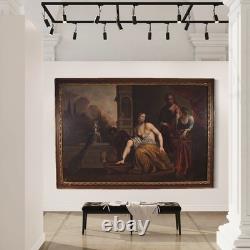







Large Antique Italian Painting of Bathsheba at Her Bath, 18th-Century Oil on Canvas
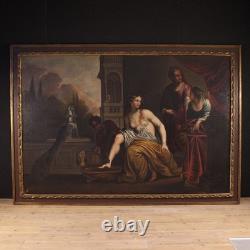
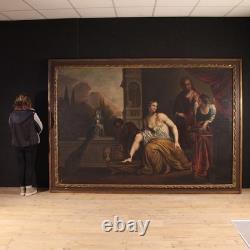
An important Italian painting from the first half of the 18th century. This monumental oil on canvas depicts the famous biblical episode of Bathsheba at her bath.
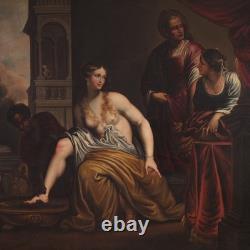
The young woman, partially nude and surrounded by attendants, is captured in an intimate moment. In the background, King David can be seen strolling on the terrace of his palace, where he catches sight of the captivating Bathsheba, wife of the soldier Uriah. A relationship develops between them, and she becomes pregnant. David then recalls Uriah from the army, hoping that he will spend time with his wife and be considered the father of the child. However, Uriah wishes to return immediately to the front to join his comrades.
The king then makes a terrible decision: he writes a letter to the army commander and entrusts Uriah with delivering the message containing his own death sentence. The order is clear: send Uriah to the front line and leave him to die.
The painting stands out for the quality of its execution and composition, its harmonious colors, and its extraordinary theatricality.
Warm tones, combined with delicately rendered skin and drapery, give the work a powerful visual and decorative impact. Particularly striking is the contrast between the luminous central figure and the darker surrounding areas, achieved through subtle chiaroscuro. The kneeling servant adds realism and dynamism, while the figures at either side help create a balanced visual narrative with a sense of depth.
The large crimson curtain acts like a theatrical curtain, revealing a scene of great classical elegance.
The central figure emerges with extraordinary luminosity from the dark background, while the rich golden dress and sumptuous drapery create a striking decorative effect. The peacock in the foreground is particularly noteworthy. Traditionally associated with beauty and royalty, it appears here as a subtle allegory of seduction and the fragility of human passions. In the background, the garden, with its fountain, cypress trees, and monumental architecture, enhances the aristocratic and refined character of the scene.
The work reflects a northern late Baroque artistic tradition, characterized by elegantly idealized forms, soft flesh tones, and meticulously rendered fabrics.
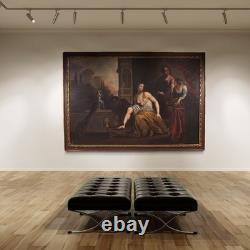
The quality of the painting and its impressive dimensions suggest a prestigious provenance, probably a palace or castle. Its imposing size makes it ideal for large interiors, state rooms, historic residences, or luxury hotel lobbies.
The spectacular 20th-century frame is carved, lacquered, and gilded, with elaborate decoration and some signs of age.
Sight dimensions: H 196 x W 296 cm.
Overall dimensions: H 230 x W 330 x D 11 cm. Each item is packed with the utmost care and professionalism, secured inside a custom-built wooden crate, and accompanied by a certificate of authenticity and guarantee, together with photographic documentation. Parino Mercato Antiquario aims to stand out by offering the best packing and shipping service on the market, free of charge.
Once payment has been received, the item will be shipped for curbside delivery. Cash on delivery is not accepted. Payment must be made within 7 working days of purchase; otherwise, the item will be considered unsold and relisted. Each item will be accompanied by a sales receipt. If you require an invoice, please request it at the time of purchase.
Free returns within 30 days. Customers may cancel their purchase within 30 days of delivery without penalty or the need to provide a reason.
Return shipping costs are paid by the seller. Damaged or altered items will not be accepted. Items must be returned in the original wooden crates used for shipping.
An important Italian painting from the first half of the 18th century. This monumental oil on canvas depicts the famous biblical episode of Bathsheba at her bath. The young woman, partially nude and surrounded by attendants, is captured in an intimate moment. In the background, King David can be seen strolling on the terrace of his palace, where he catches sight of the captivating Bathsheba, wife of the soldier Uriah. A relationship develops between them, and she becomes pregnant. David then recalls Uriah from the army, hoping that he will spend time with his wife and be considered the father of the child. However, Uriah wishes to return immediately to the front to join his comrades. The king then makes a terrible decision: he writes a letter to the army commander and entrusts Uriah with delivering the message containing his own death sentence. The order is clear: place Uriah on the front line and let him die.
The painting stands out for the quality of its execution and composition, its harmonious colors, and its extraordinary theatricality. Warm tones, combined with delicately rendered skin and drapery, give the work a powerful visual and decorative impact.
Particularly effective is the contrast between the luminous central figure and the darker surrounding areas, achieved through refined chiaroscuro. The kneeling servant adds realism and dynamism, while the figures at either side help create a balanced visual narrative with a sense of depth.
The large crimson curtain acts like a theatrical curtain, revealing a scene of great classical elegance. The central figure emerges with extraordinary luminosity from the dark background, while the rich golden dress and magnificent drapery create a striking decorative effect.
The peacock in the foreground is particularly noteworthy. Traditionally associated with beauty and royalty, it appears here as a sophisticated allegorical reference to seduction and the fragility of human passions. In the background, the garden, with its fountain, cypress trees, and monumental architecture, enhances the aristocratic and cultured character of the scene.
The work reflects a northern late Baroque artistic tradition, characterized by elegantly idealized forms, soft flesh tones, and meticulously rendered fabrics. The quality of the brushwork and the monumental scale suggest that it was originally intended for a prestigious setting, probably an aristocratic palace or castle.
Its imposing size makes it ideal for large interiors, state rooms, historic residences, or luxury hotel lobbies.
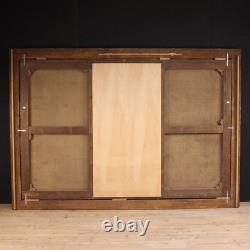
The spectacular 20th-century frame is carved, lacquered, and gilded, with elaborate decoration and some signs of age. The painting has previously been restored, including relining, replacement of the stretcher, and localized retouching. There is minor paint loss in the lower left corner (see photo).
Overall, it is in good condition.
Sight dimensions: H 196 x W 296 cm.
Overall dimensions: H 230 x W 330 x D 11 cm.
Free returns within 30 days. Altered or damaged items cannot be returned.
An important Italian painting from the first half of the 18th century. This monumental oil on canvas depicts the famous biblical episode of Bathsheba at her bath. The young woman, partially nude and surrounded by attendants, is captured in an intimate moment. In the background, King David can be seen strolling on the terrace of his palace, where he catches sight of the captivating Bathsheba, wife of the soldier Uriah. A relationship develops between them, and she becomes pregnant. David then recalls Uriah from the army, intending for him to spend time with his wife so that the child’s paternity can be attributed to him.
However, Uriah wishes to return immediately to the front to join his comrades. The king then makes a terrible decision: he writes a letter to the army commander and entrusts Uriah himself with delivering the message containing his own death sentence.
The order is clear: place Uriah on the front line and ensure his death.
The painting stands out for the quality of its execution and composition, its harmonious colors, and its extraordinary theatricality. Warm tones, combined with delicately rendered skin and drapery, give the work a powerful visual and decorative impact. Particularly effective is the contrast between the luminous central figure and the darker surrounding areas, achieved through refined chiaroscuro.
The large crimson curtain acts like a theatrical curtain, revealing a scene of great classical elegance. The central figure emerges with extraordinary luminosity from the dark background, while the rich golden dress and magnificent drapery create a striking decorative effect. The peacock in the foreground is particularly evocative. Traditionally associated with beauty and royalty, it appears here as a sophisticated allegorical reference to seduction and the fragility of human passions. In the background, the garden, with its fountain, cypress trees, and monumental architecture, enhances the aristocratic and cultured character of the scene.
The work reflects a northern late Baroque artistic tradition, characterized by elegantly idealized forms, soft flesh tones, and carefully rendered fabrics. The quality of the brushwork and the monumental scale suggest that it was originally intended for a prestigious setting, probably an aristocratic palace or castle. Its imposing size makes it ideal for large interiors, reception rooms, historic residences, or luxury hotel lobbies.
The impressive 20th-century frame is made of carved, lacquered, and gilded wood. It is highly decorative and shows some signs of age. The painting has previously been restored, including relining, replacement of the stretcher, and localized retouching. There are small areas of paint loss in the lower left corner (see photo). Overall, it is in good condition.
Sight dimensions: H 196 x W 296 cm. Each item is packed with the utmost care and professionalism, secured inside a custom-built wooden crate, and accompanied by a certificate of authenticity and guarantee, together with photographic documentation. Parino Mercato Antiquario aims to stand out by offering the best packing and shipping service on the market, free of charge.
Once payment has been received, the item will be shipped for curbside delivery.
Cash on delivery is not accepted. Payment must be made within 7 working days of purchase; otherwise, the item will be considered unsold and relisted. Each shipped item will be accompanied by a sales receipt. If you require an invoice, please request it at the time of purchase.
We conduct transactions with the utmost professionalism and expect the same in return.
Free returns within 30 days. Customers may cancel their purchase within 30 days of delivery without penalty or the need to provide a reason.
Return shipping costs are paid by the seller. Damaged or altered items will not be accepted for return. Items must be returned in the original wooden crates used for shipping.
An important Italian painting from the first half of the 18th century. This monumental oil on canvas depicts the famous biblical episode of Bathsheba at her bath.
However, Uriah wishes to return immediately to the front to join his comrades. The king then makes a harsh decision: he writes a letter to the army commander and entrusts Uriah with delivering the message containing his own sentence.
The order is clear: Uriah is to be sent to the front line and left to die.
The painting is distinguished by the quality of its execution and composition, its harmonious colors, and its extraordinary theatricality. Warm tones, combined with delicately rendered skin and drapery, give the work a powerful visual and decorative impact. Particularly effective is the contrast between the luminous central figure and the darker surrounding areas, achieved through refined chiaroscuro.
The large crimson curtain acts like a theatrical curtain, revealing a scene of great classical elegance. The central figure stands out with extraordinary luminosity against the dark background, while the magnificent golden dress and sumptuous drapery create an impressive decorative effect. The peacock in the foreground is particularly striking. Traditionally associated with beauty and royalty, it serves here as a sophisticated allegorical reference to seduction and the transience of human passions. In the background, the garden, with its fountain, cypress trees, and monumental architecture, underscores the aristocratic and cultured character of the scene.
The work reflects a northern English late Baroque artistic tradition, characterized by elegantly idealized forms, soft flesh tones, and meticulously rendered fabrics.
The high quality of the painting and its monumental scale suggest that it originally occupied a prestigious setting, probably an aristocratic palace or castle. Its imposing size makes it ideal for large interiors, reception rooms, historic residences, or luxury hotel lobbies.
The magnificent 20th-century frame is carved, lacquered, and gilded, with elaborate decoration and some age-related wear. The painting has previously been restored, including relining, replacement of the stretcher, and localized retouching.
There is minor paint loss in the lower left corner (see photo). Overall, it is in good condition.
Sight dimensions: H 196 x W 296 cm.
Overall dimensions: H 230 x W 330 x D 11 cm.
Each item is packed with the utmost care and expertise, secured inside a custom-built wooden crate, and accompanied by a certificate of authenticity and a guarantee with photographic documentation. Parino Mercato Antiquario distinguishes itself by offering an outstanding packing and shipping service free of charge.
Once payment has been received, the goods will be dispatched promptly for curbside delivery. Cash on delivery is not accepted.
Payment must be made within 7 working days of purchase; otherwise, the item will be considered unsold and relisted. Each item sold is accompanied by a sales receipt. If you require an invoice, please request it at the time of purchase.
Free returns within 30 days. Customers may cancel their purchase within 30 days of delivery without giving a reason and at no additional cost.
Return shipping costs are paid by the seller. Damaged or altered items will not be accepted for return. Goods must be returned in the original packaging used for shipping.
Antique Italian Landscape Painting, 18th-Century Oil on Canvas with Frame.
Antique Italian Painting of the Virgin and Child, 18th-Century Oil on Canvas.
Antique Italian Pastoral Landscape Painting, 18th-Century Oil on Canvas.
Antique Italian Painting of Christ and the Woman Taken in Adultery, 18th-Century Oil on Canvas.
Italian Religious Painting of the Virgin and Child, 18th-Century Oil on Canvas.
Antique Italian Seascape Painting, 18th-Century Oil on Canvas.
Antique Religious Painting of Saint Francis of Assisi, 18th-Century Oil on Canvas.
Antique French Landscape Painting with Dogs, 18th-Century Oil on Canvas.